- MindWatch
- Posts
- Miley Cyrus Talks Therapy
Miley Cyrus Talks Therapy
June is PTSD awareness month, and Cyrus just crushed the stigma of mental health.
Keith Myers
June 02, 2025

It’s always a good thing when artists like Miley Cyrus say good things about therapy.
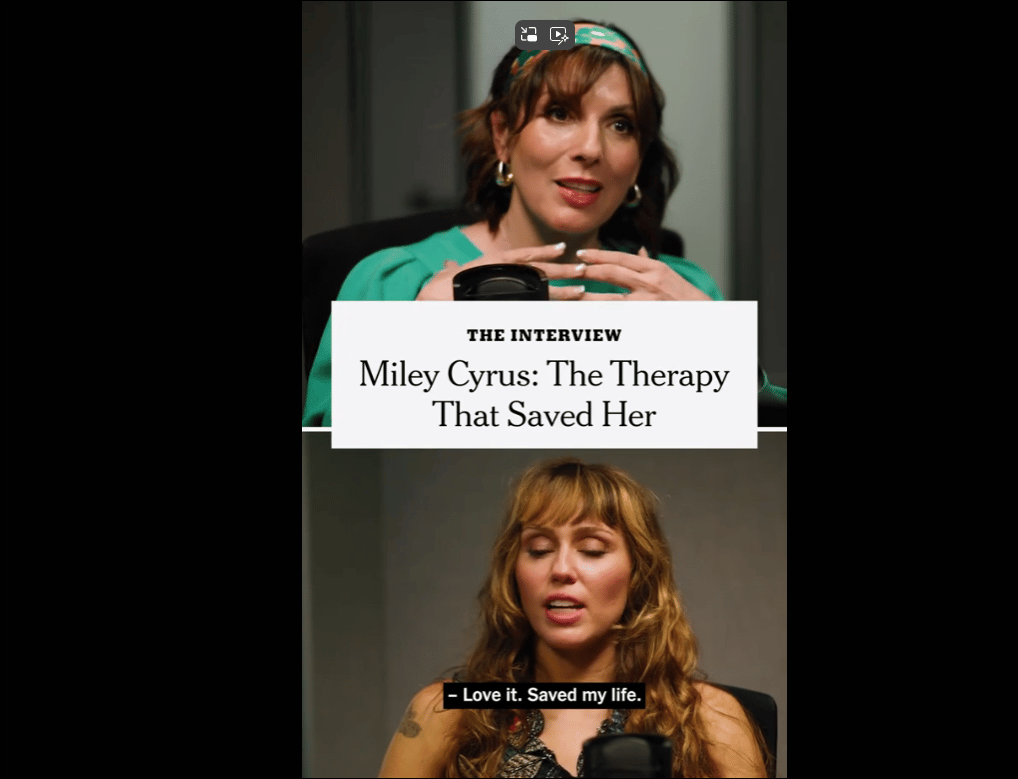
Over the weekend, Miley Cyrus sat down with Lulu Garcia-Navarro of the New York Times to discuss the positive effects of therapy. Actually, she talked about a lot more than therapy (i.e. the effects of fame on her family), but her thoughts about therapy is where I want to focus today as we highlight stories and culture that amplifies stigma-crushing behavior.
Miley Cyrus is a bigtime music artist who has created 14 albums and has over 60,000,000 monthly listeners on Spotify. Yes, that’s 60 MILLION. 😵 Most say she got her start on Disney’s show Hannah Montana, and you may have heard of her father Billy Ray Cyruss and his “achy breaky heart.” 💔
Full disclosure, Miley is not my favorite artist as she has a provocative style and hasn’t been free of controversy over the years.
But she gets points with me for doing this interview.
Why?
As I’ve shared during the last two editions of MindWatch, sharing personal stories about mental health reduces the stigma each and every time. Especially when people share stories of how they’ve improved their mental health or share times when they have overcome trauma.
As a preview of the video, here’s a snippet: Miley Cyrus: Navigating Fame and Therapy Insights | TikTok. For more context, click the article below if you want to watch the full interview:

Whether you clicked above to watch the snippet or the full interview, you noticed that she talked specifically about EMDR therapy. I was struck when she said, “Love it (EMDR). Saved my life.” What an endorsement! 🎉
👁 What is EMDR therapy? 👁
The letters stand for Eye Movement Desensitization Reprocessing (EMDR), and it’s considered an evidence-based treatment for Posttraumatic Stress Disorder (PTSD).
I’ll say more about PTSD in a moment.
I became intensively trained in EMDR therapy 14 years ago, because I was working at a hospital that served veterans who suffered a traumatic brain injury during their military service and EMDR was rated by the Army Surgeon General as an A+ treatment for combat PTSD (it still is). That’s the first time I saw the effectiveness of the therapy, and I’ve continued to use EMDR with veterans, first responders, and survivors of interpersonal violence in my private practice since 2013. I teach counseling students an introduction into the therapy and how to begin their training.
Back in 2015, I published a peer-reviewed article about a case study of a former client who overcame a severe choking phobia as a result of treating him with EMDR. You can read the article here: EMDR With Choking Phobia: Reflections on the 2008 Study by de Roos and de Jongh | Springer Publishing.
Nerd out everyone! 😎 Clearly, I’m a zealot about EMDR and its effectiveness.
So, when celebrity Miley Cyrus comes out and says therapy saved her life, millions of people become instantly exposed to more hopeful and have less stigma about mental health. Positive shockwaves will be felt months after, and I’m really thrilled about all this good exposure.
Want more of the good stuff?
Here are two of my favorite conversations by celebrities about how mental health counseling was helpful: Alex Rodriguez ⚾ and Kristen Bell 👸. Alex & Kristen, major stigma crushing points for you! If you want to nerd out (again) about even more celebrities who have opened up about mental health, here’s a good list: 17 Celebrities Who Have Opened Up About Their Mental Health | Vogue.
So, I’ve covered the good work of Miley and other celebrities, and I’ve discussed what EMDR therapy is and how it’s effective for the treatment of PTSD. Which leads me to asking…
👁 What is PTSD, anyway? 👁
PTSD is a mental health disorder that sometimes occurs after a person experiences a traumatic or life-threatening event(s). Some symptoms of PTSD can include nightmares, feeling like the person is reliving the event, avoidance of reminders of the event, problems sleeping, intense fear or helplessness, sad mood, distorted beliefs about self, or a state of hypervigilance.
In case you didn’t realize it, June is national PTSD awareness month. Spread the word!
You can learn more about PTSD here: https://lnkd.in/e_nWuTu5
Did You Know?
Military members and first responders (i.e. police, fire, EMS, etc.) are populations that tend to be more at risk of experiencing PTSD than the general population, even though the majority of veterans/first responders do not develop PTSD. The higher rate of PTSD is partly because of the nature of their job in dangerous or life-threatening situations, as well as having significant exposure to death and related traumatic stressors (i.e. dismembered bodies, being exposed to severe suffering, death of comrades, etc.). Maybe I’ll do an edition in the future about vets or first responders!
And now it’s time for ACTION!

Use culture or news to talk about mental health with one person in your life.
By discussing a cultural or news event with another person in your life that highlights mental health, you help create more awareness in your circle and thereby society as a whole. That’s part of my goal here: to react to culture and news that offer practical ways to reduce the stigma around mental health.
That one cultural conversation with one person can quickly become 12 conversations or a ripple of 50 people being positively impacted when that one person shares with 6 people and those people share with…you get the idea!
Thanks to all of you for coming along this journey with me.
And be sure to come back…be here.
Until next week,
Keith