- MindWatch
- Posts
- The Tool We Still Shame
The Tool We Still Shame
Amanda Seyfried said it out loud.

Keith Myers
January 09, 2026
This week actress Amanda Seyfried shared a wide-ranging profile in Vogue where she spoke candidly about her life, her career, her family, and her lifelong experience with obsessive-compulsive disorder (OCD).
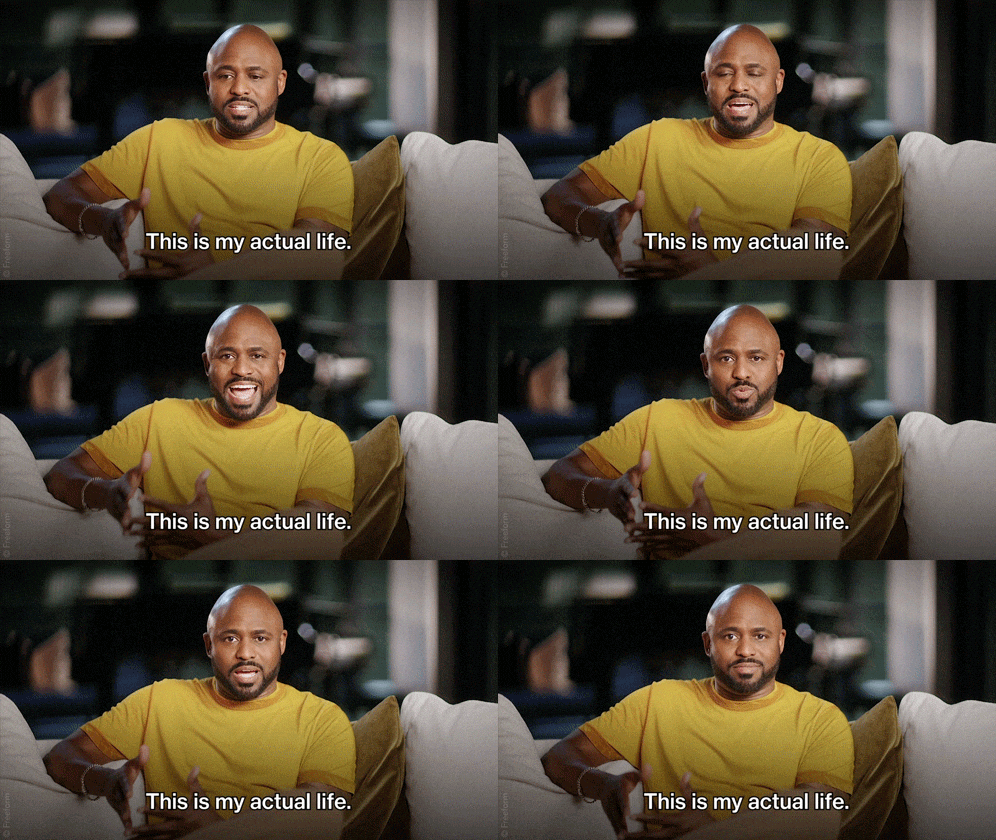
In that interview she explained she was diagnosed at 19 and still takes medication every night.
You can read the full interview here:
https://www.vogue.com/article/amanda-seyfried-digital-cover-january-2026-interview
She said it without apology.
That matters more than it might sound.
Because the most stigmatized thing in mental health is not always the diagnosis.
It is the tool.
The tool is medication.
The quiet rule nobody says out loud
There is a systemic myth floating through our culture that sounds like this:
“If you are strong enough, you should not need meds.”
We never say it directly.
But it shows up everywhere.
In the way people whisper when they admit they take something.
In the way friends say “Are you still on that?”
In the way headlines celebrate people who get off medication more than people who stay well on it.
We praise white knuckling.
We shame stabilization.
And that stigma does damage.
What Amanda actually did
Seyfried did not just say she has OCD.
She said she still treats it.
She did not frame medication as temporary or embarrassing.
She framed it as part of how she lives.
That cuts straight through one of the deepest myths in mental health.
That needing help means you are broken.
That taking medication means you failed.
That real healing means doing it on willpower alone.
None of that is true.
Brains are organs.
Some need chemical support.
Some need therapy.
Most need both.
That is not weakness.
That is how biology works.
The cons of medications
I know that medication is not perfect.
Some people experience significant side effects.
Some try a drug that does not help.
Some need to change or stop.
That is part of care.
What matters is that medication is a tool meant to improve life, not something people should be ashamed of using.
Why medication still gets singled out
We do not shame people for wearing glasses.
We do not shame people for taking insulin.
We do not shame people for blood pressure meds.
But psychiatric medication gets treated differently.
Why?
Because it touches identity.
It touches fear.
It touches control.
It touches the myth that emotions should only be managed by character/behavior instead of chemistry.
Medication threatens the story that suffering is something you should be able to outgrow.
So, people hide it.
Even when it is the thing keeping them alive.
What this stigma costs
Gif by HannahWitton on Giphy
When medication is treated like failure, people do three things.
They delay getting help.
They quit too early.
They often suffer in silence.
I see it all the time.
Clients who would be functioning if they were supported chemically.
Parents afraid their child will be labeled.
Professionals terrified that taking meds will make them look weak.
Stigma does not protect people. It isolates them actually making them more vulnerable.
What strength actually looks like
Amanda Seyfried did something quietly radical.
She told the truth about how she stays well.
Not how she got better once.
Not how she conquered something.
How she manages something.
Welcome, Amanda, to the stigma-crusher club! 🎉

Gif by fallontonight on Giphy
That is real mental health.
Not the fantasy of being fixed.
The practice of being supported.
Medication is not a moral issue.
It is a tool.
And tools are meant to be used.
What you can do
Gif by houndstoothmg on Giphy
If you want to help crush this stigma, start here.
1. Stop treating medication as a secret.
If someone shares they take medication, do not flinch. Do not minimize. Try not to act surprised.
2. Change the language.
Do not ask “Are you still on that?”
Say this instead, “I hope it’s helpful to you!”
3. Make room for nuance.
Some people use medication long term.
Some short term.
Some not at all.
What matters is support, not shame.
Because silence is what keeps stigma powerful.
And honesty is what breaks it.
Thank you all for coming along this journey.
Until next Friday morning, come back…be here.
Keith